
Three texture wall techniques that don’t look like a 1990s sitcom
May 18, 2026
Safely store leftover paint (or dispose of it properly)
May 18, 2026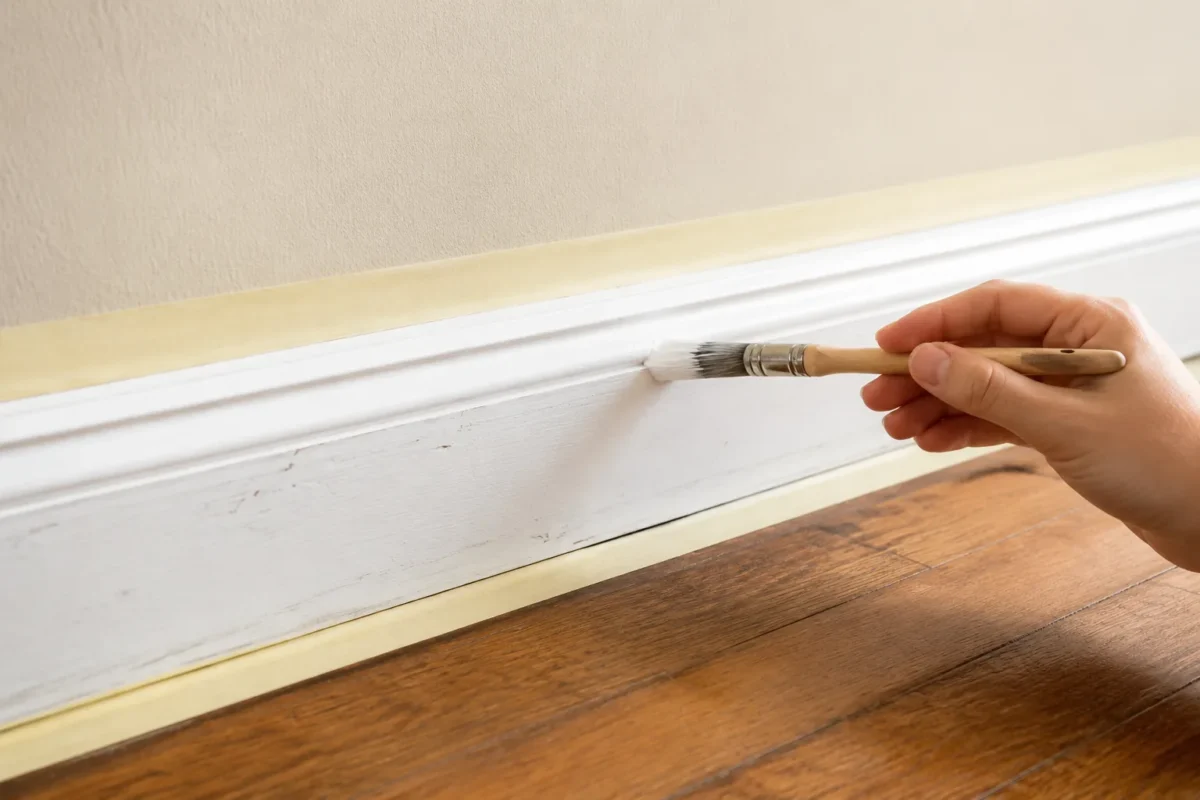
Trim takes more daily abuse than walls — vacuum hits, shoe scuffs, dog scratches, chair-back marks. Touching it up is a one-afternoon job, if you have the right small tools.
What you need
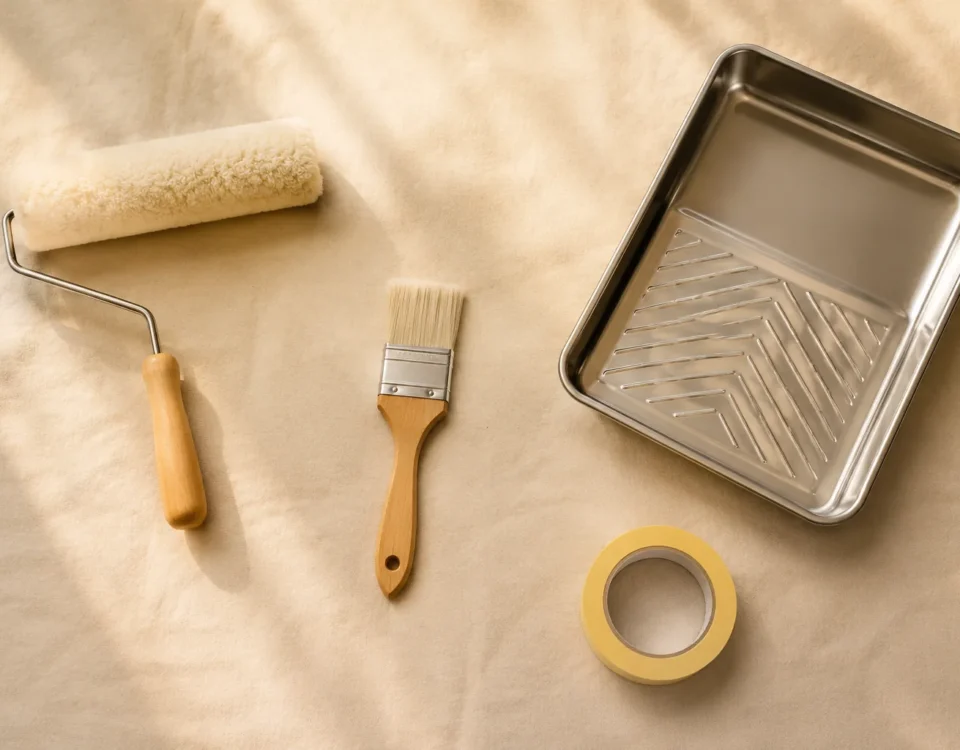
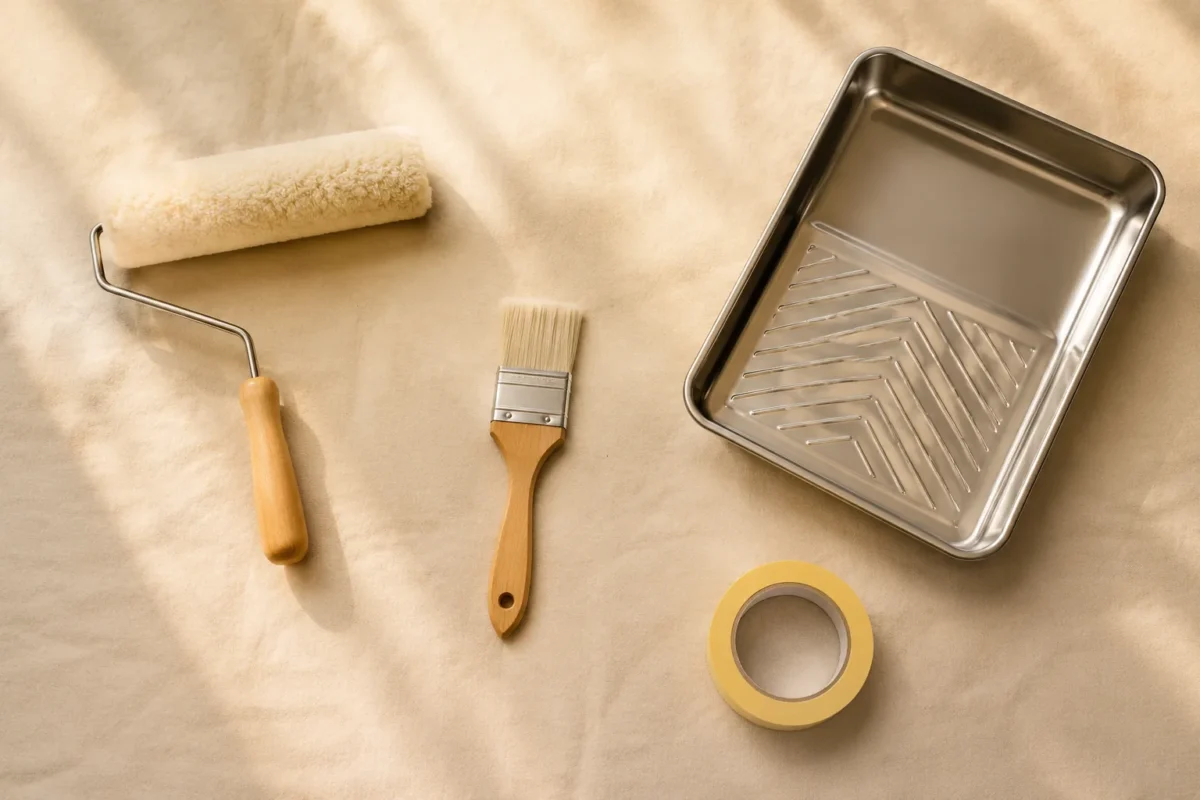
Our Floor & Trim Touch-Up Kit (€39) has narrow brushes, touch-up sticks, sandpaper, narrow masking tape, a small tray and a cloth. Plus: leftover paint from your original trim job (or matched fresh paint).
Method
1. Identify the damage
Walk the room with a lamp. Mark every scuff, scratch and chip with a pencil. Be systematic — once you start painting, you can’t see what’s already touched up.
2. Sand and smooth
For raised chips: sand smooth with 240-grit. For paint scuffs without damage: a fine sanding ensures the new paint adheres. Wipe dust with the cloth.
3. Mask the wall
Run the narrow masking tape along the wall just above the skirting (or beside the door frame). This is your line — paint up to it, no further.
4. Touch up
With the smallest flat brush, dab paint into the scuff with the brush almost dry. Feather edges into surrounding paint. Two thin coats beats one thick one.
5. Edge cases
- Deep gouge: fill with wood filler first, sand, then paint.
- Original paint not matched perfectly: bring a chip to a paint shop for spectrophotometer matching.
- Worn corner of door frame: a touch-up stick (provided) is faster than a brush.
6. Pull tape while wet
Pull tape while paint is still tacky for a clean line.